Hire compliantly in Taiwan. Navigate Labor Insurance, National Health Insurance, a mandatory 6% pension contribution and a Labor Standards Act where overtime rules and leave entitlements are strictly enforced.
Hiring guides covering regulations, contributions and costs specific to Taiwan. Updated for 2026.
Average Salary in Taiwan 2026: By Sector, City & Cost Guide
The average salary in Taiwan is approximately NT$58,000 gross per month in 2026, with a median closer to NT$45,000. Taiwan's economy is dominated by semiconductors and technology, with TSMC alone producing nearly 90% of the world's most advanced chips. The minimum wage is NT$29,500 per month from January 2026. Employer costs add approximately 14-19% on top of gross salary through labor insurance, National Health Insurance, and mandatory pension contributions. This guide covers average salaries by sector, city, and experience level, the full employer cost breakdown, income tax brackets, and how Taiwan compares to other Asian hiring markets.
Taiwan’s minimum wage is NT$29,500 per month (approximately US$967) and NT$196 per hour as of 1 January 2026, a 3.18% increase from the previous year. This marks the 10th consecutive annual increase, reflecting the government’s sustained policy of raising wages in line with economic growth and inflation. An estimated 2.47 million workers benefit from the adjustment. Taiwan’s minimum wage is a national flat rate that applies uniformly across all industries and regions. This guide covers the current minimum wage rates, mandatory employer contributions (Labor Insurance, National Health Insurance, Labor Pension), working hours and overtime rules under the Labor Standards Act, leave entitlements, penalties for non-compliance, and what international companies hiring in Taiwan need to know.
The 15 best cities to work remotely in 2026, ranked by people who actually care about internet speed, timezone overlap, and visa compliance rather than Instagram aesthetics. From Lisbon and Mexico City to Taipei and Tbilisi, with honest monthly costs, real downsides, digital nomad visa requirements, and the compliance angle every other list ignores: whether your employer can actually hire you legally while you work from these places.
Taiwan calculates Labor Insurance, NHI and pension contributions using bracket-based insured salary tables, not flat percentages on gross pay. A provider applying simple percentage math to actual salary will produce incorrect contributions that fail reconciliation with the Bureau of Labor Insurance.
Our assessment of providers in Taiwan evaluates Labor Insurance accuracy, NHI premium handling, pension compliance and Labor Standards Act adherence.
Employer contributions total approximately 15-20% of insured salary. Labor Insurance (~8.05%), NHI (~4.84% including dependents), Labor Pension (6% minimum), Employment Insurance (~0.7%) and Occupational Accident Insurance (0.11-0.93%). Each uses different insured salary brackets and caps.
The 6% Labor Pension is the single largest employer cost. Deposited monthly into individual employee pension accounts at the Bureau of Labor Insurance. This is a mandatory defined contribution, not pooled. The employee can voluntarily add up to 6% more (tax-deductible).
The minimum wage rose to TWD 29,500/month in January 2026. This is the 10th consecutive annual increase. The minimum wage also resets the floor for all insurance bracket tables, which means every contribution calculation updates when the minimum changes.
From April 2026, foreign professionals are eligible for Labor Pension. Previously excluded, defined-contribution pension coverage now extends to foreign professionals. This increases the employer cost of hiring expatriates by 6% of insured salary.
Taiwan uses adjusted working days (make-up Saturdays). The government creates long weekends by moving working days to nearby Saturdays. Employees work those Saturdays to compensate. Your payroll and attendance systems must track these adjusted days correctly.
Why hire in Taiwan
The global semiconductor capital with unmatched chip talent
TSMC, MediaTek, ASE, UMC. Taiwan produces over 60% of the world's advanced semiconductors. The talent pool in chip design, process engineering, materials science and related supply chain roles is deeper than anywhere else on earth.
Employer contributions are moderate at 15-20%
Compared to Japan (15-17% + culturally expected bonuses), South Korea (10-11% + severance), or Germany (21%+), Taiwan's statutory employer burden sits in a comfortable middle range with no hidden bonus obligations.
Universal NHI means no private health insurance burden
Taiwan's National Health Insurance covers all employees and their dependents through the payroll contribution. There is no need to arrange or fund separate private health insurance. The employer's NHI cost is already included in the ~15-20% contribution total.
Strong intellectual property protection by Asian standards
Taiwan ranks consistently among the top Asian economies for IP enforcement. For companies hiring engineers to work on proprietary technology, Taiwan's legal framework provides meaningful protection for trade secrets and patents.
Key Employment Facts
Taiwan's leave entitlement scales steeply with tenure and the Labor Standards Act's overtime caps are enforced with criminal penalties, not just fines.
Key Employment Facts
Minimum Wage
TWD 29,500/month (TWD 196/hour, from January 2026)
Probation Period
No statutory provision (typically 3 months contractual)
Standard Working Hours
40 hours/week (8 hours/day)
Paid Annual Leave
3 days (6 months), 7 days (1 year), scaling to 30 days (10+ years)
Notice Period
10-30 days (by tenure)
13th Salary
Not statutory (year-end bonus of 1-2 months common)
Sick Leave
30 days/year at 50% pay (employer-funded)
Maternity Leave
8 weeks at full pay (employer-funded)
Good to Know: Taiwan’s Labor Standards Act does not formally recognize a probation period. Any “probation” written into a contract has no special legal status. Termination during probation still requires a valid statutory ground under Article 11 or 12 of the LSA. Employers cannot simply end employment because “probation failed” without meeting the legal threshold for dismissal.
What to Watch When Hiring in Taiwan
All contributions use bracket-based insured salary tables
Labor Insurance, NHI and pension are each calculated on a different insured salary bracket, not on actual gross pay. Each table has its own ceiling (Labor Insurance: TWD 45,800, NHI: TWD 313,000, Pension: TWD 150,000). Your payroll must map each employee's actual salary to the correct bracket in each table separately.
Overtime caps carry criminal penalties for employers
Maximum overtime is 46 hours/month (extendable to 54 with consent, capped at 138 hours per 3 months). Overtime rates are 134% for the first 2 hours and 167% for hours 3-4. Violations can result in criminal prosecution of the employer, not just administrative fines.
Unused annual leave must be paid out or carried forward
If an employee does not use annual leave by the end of the leave year, the employer must either pay out the unused days at the daily wage rate or agree to carry them forward. There is no "use it or lose it" unless the employer has offered and the employee has declined.
Supplementary NHI premium applies to bonuses and irregular income
A 2% supplementary NHI premium applies to bonuses, commissions and other irregular payments that exceed the employee's monthly insured salary. The employer withholds this from the employee and also pays a separate 2% employer supplementary premium on total payroll variances.
Employer Costs and Employee Taxes in Taiwan
Taiwan's employer contribution system spans five separate programs, each with its own insured salary bracket table, cap and calculation method. Total employer cost runs 15-20% of insured salary depending on industry risk and employee salary level.
Employer Contributions (2026)
Contribution
Employer Rate
Labor Insurance (employer share, 70%)
~8.05% (capped at TWD 45,800 insured salary)
Employment Insurance (employer share, 70%)
~0.70% (capped at TWD 45,800)
Occupational Accident Insurance
0.11-0.93% (industry risk, employer only)
NHI (employer share, 60% x 1.56 dependents)
~4.84% (capped at TWD 313,000)
Labor Pension (mandatory)
6% minimum (capped at TWD 150,000)
Wage Compensation Fund
0.025%
Total Employer Cost
~15-20% of insured salary
Employee Taxes
Tax / Contribution
Employee Rate
Income Tax (progressive)
5-40% (5 brackets)
Labor Insurance (employee share, 20%)
~2.30%
Employment Insurance (employee share, 20%)
~0.20%
NHI (employee share, 30%)
~1.55%
Labor Pension (voluntary)
Up to 6% (tax-deductible)
Good to Know: For an employee earning TWD 60,000/month in Taipei: Labor Insurance employer share ~TWD 3,700, NHI employer share ~TWD 2,900, Labor Pension TWD 3,600 (6%), Employment Insurance ~TWD 420, Occupational Accident ~TWD 200. Total employer cost: approximately TWD 70,800/month or 1.18x salary. The pension cap at TWD 150,000 means employer pension cost flattens at TWD 9,000/month for high earners. Above that salary, effective employer contribution percentage drops. Year-end bonuses of 1-2 months are culturally expected and trigger supplementary NHI premium at 2%.
Public Holidays in Taiwan (2026)
Taiwan has approximately 12 public holidays per year. The government creates extended breaks through adjusted working days, where a nearby Saturday becomes a make-up workday.
Date
Holiday
January 1
New Year’s Day (Yuandan)
February 16-20
Lunar New Year (5 statutory days, extended to 9 with weekends)
February 28
Peace Memorial Day
April 4
Children’s Day
April 5
Tomb Sweeping Day (Qingming)
May 1
Labour Day
June 19
Dragon Boat Festival (Duanwu)
September 25
Mid-Autumn Festival (Zhongqiu)
September 28
Teachers’ Day (Confucius Birthday)
October 10
National Day (Double Ten)
October 25
Retrocession Day
December 25
Constitution Day
Good to Know: Lunar New Year is Taiwan’s most significant holiday. In 2026, the official break runs February 14-22 (9 consecutive days including weekends and adjusted days). Businesses effectively shut down. Make-up Saturdays are scheduled before or after the holiday to compensate. Employees must work those Saturdays or use annual leave. Your attendance system must distinguish between regular Saturdays (off) and make-up Saturdays (working days).
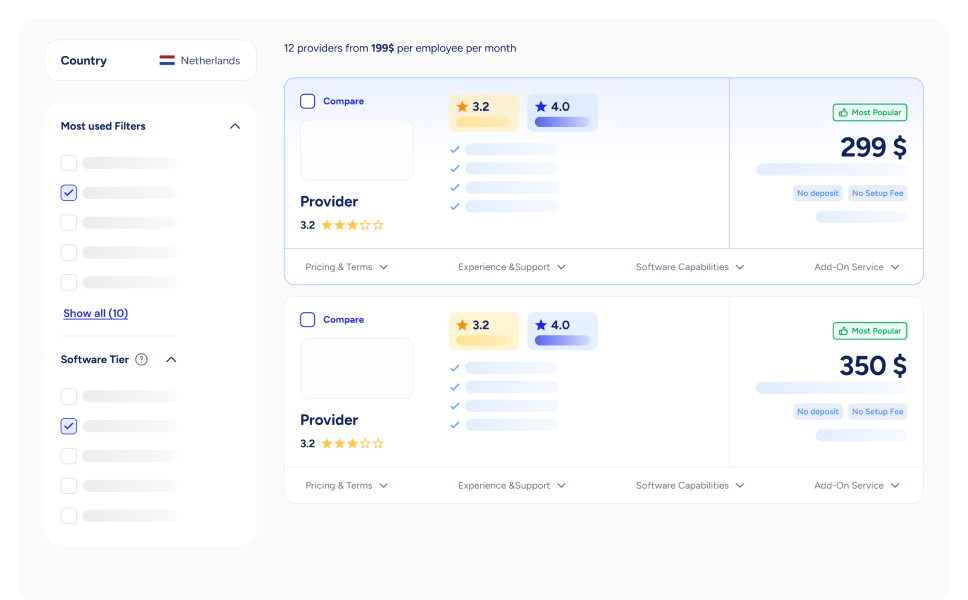
Compare All EOR Providers for Taiwan
Filter providers by Taiwan coverage, Labor Insurance accuracy and pension compliance using the Employsome Comparison Tool. Over 130 providers compared.