Insiders #4 with Playroll: Why Capital Efficiency Beats Growth at All Costs
A conversation with Brendon Silver, CEO of Playroll, on spinning an EOR out of VAT IT, why building in complex markets first creates better infrastructure, the gap between what EOR providers sell and what they deliver, and why owning your supply chain matters more than owning your marketing budget.

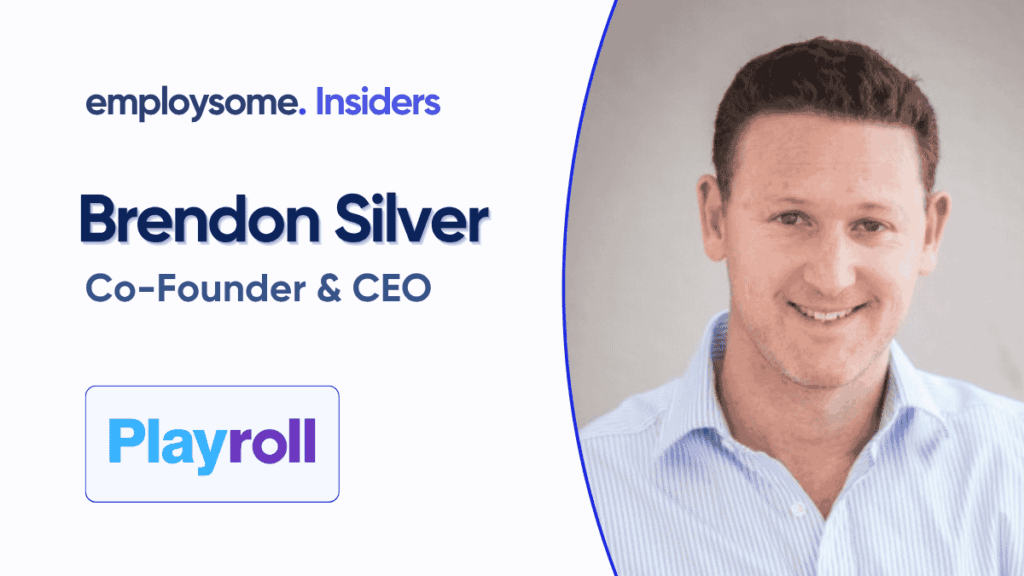
Welcome to Employsome Insiders, a series where we sit down with Employer of Record (EOR) founders and operators to dig into the markets, models, and decisions behind the companies shaping global employment. Honest conversations with the people building this industry from the ground up. For this edition, we spoke with Brendon Silver, Co-Founder and CEO of Playroll.
Playroll was born inside VAT IT, a South African VAT recovery business, before spinning out as a standalone company. It now operates its own entities across multiple regions and has deliberately built its expansion on operational depth rather than VC-fuelled growth. In a market where most providers raise first and build later, Playroll went the other way: build the operational infrastructure in complex markets first, then scale into the ones where everyone else already plays. We wanted to understand what that approach looks like from the inside, and whether capital efficiency is a genuine competitive advantage or just a story you tell until the next funding round.

From VAT IT to Standalone EOR
Playroll didn’t start as a blank-sheet startup. It began inside VAT IT, a global VAT recovery business, which gave it something most early-stage EOR companies never get: an existing client base to test against and a commercial infrastructure to build on. We asked Brendon when he knew it had to become its own company.
“We saw real demand for global employment solutions from the VAT IT client base very early on. Starting inside an established business gave us something most early-stage companies don’t get: a distribution network and a way to test product-market fit before we’d spent years building in the dark. But once we saw the size of the opportunity, we knew we couldn’t build the right business inside someone else’s infrastructure. We needed to own our product, our processes, and our direction. That decision shaped everything. We didn’t inherit a way of doing things. We built from scratch, which meant we could build it properly.”
Brendon Silver, Co-Founder & CEO of Playroll
That last point is worth sitting with. Most EOR companies that spin out of a parent business carry legacy systems, processes, and assumptions. Building from scratch inside a safety net is a genuinely different starting position than either bootstrapping from zero or raising venture capital. It gave Playroll the commercial validation of a funded company without the investor pressure that typically comes with it.
Why Complex Markets Build Better Infrastructure
Playroll’s early operations in some of the world’s most complex regulatory environments forced it to build operational muscle that most global EOR providers avoid entirely. We asked Brendon what it actually takes to run compliant operations in markets where you can’t rely on shortcuts.
“Running a compliant EOR starts with understanding that it’s an operational service, wrapped in software. Many companies sell the interface alone. We run the actual operation. We also run a globally distributed company ourselves, so we feel the same friction our customers do. That shapes how we build. Operating in complex markets forced us to build properly from the start. You can’t rely on third parties, and you can’t cut corners on compliance. If you can operate well in those markets, you’ve built the operational muscle to run anywhere.
Most providers avoid that complexity. We leaned into it. That foundation is in our DNA. The infrastructure we developed operating in some of the world’s most complex markets is the same infrastructure we’re now scaling into Europe, the US, and APAC. The expansion is fast, but the approach is the same.”
Brendon Silver, Co-Founder & CEO of Playroll
This is a strategic argument, not just a geographic one. The thesis is that if you can build operationally sound EOR infrastructure in high-complexity jurisdictions first, you can then scale that same infrastructure into markets like Europe and the US where many providers already operate, but with better operational foundations than competitors who built for the easy markets first.
Capital Efficiency vs. Growth at All Costs
The EOR market has seen massive consolidation over the past two years, with large players acquiring smaller ones and billions in VC funding reshaping the competitive landscape. We asked Brendon how Playroll positions itself in that environment.
“We’ve taken a very different approach. We’re building a sustainable, capital-efficient business, not chasing top-line growth at any cost. A lot of the consolidation in the market has been driven by distribution. The providers who will win long term are the ones who’ve built operational depth to match their commercial growth. That’s been our focus from the start, and it’s what lets us keep service quality consistent as we scale.
Our model has always been responsible growth: only expand as fast as we can actually serve clients well. If you build on solid economics and genuine service quality, you’re always in a position to take advantage of opportunities when they arise. That’s where our head is right now.”
Brendon Silver, Co-Founder & CEO of Playroll
💡 Employsome Insight
This mirrors a pattern we’re seeing across the EOR industry. Several providers that raised aggressively in 2021-2023 are now dealing with the consequences: pressure to grow revenue faster than they can grow service quality, leading to the exact gap between sales promise and post-sale reality that buyers complain about most. Capital efficiency isn’t just a financial strategy. It’s a service quality strategy. For a deeper look at how the market is consolidating, read our analysis of the EOR market size and trends.
Where Playroll Wins and Where It Doesn’t Try To
Companies evaluating EOR providers often end up comparing Playroll against the large global platforms like Deel, Remote, and G-P. We asked Brendon how he thinks about that comparison and where he sees Playroll’s genuine advantages.
“We’re very clear on where we win, and we lean into that.
First, economics. We operate our own entities, so we’re not layering margin on top of third parties. That lets us stay competitive without compromising service.
Second, service. Most providers give you a platform. We give you a team. We embed into our clients’ workflows and run this alongside them. That means fast response times, clean onboarding, no handoffs.
Third, competence. The people you’re dealing with are operators, lawyers, payroll specialists, compliance experts. Never generic support. That shows up quickly once you’re live on the platform. We’re not trying to win on everything. But in the areas that actually matter post-sale, we’re very strong.”
Brendon Silver, Co-Founder & CEO of Playroll
The distinction between “giving you a platform” and “giving you a team” is one we hear frequently from service-led EOR providers. The real test is whether it holds up at scale. Brendon’s answer suggests Playroll is deliberately constraining its growth to maintain that service level, which is the same strategic bet we’ve seen from other founders and executives in this Insiders series.
The US, APAC, and Where the Growth Is Going
We asked Brendon which regions Playroll is investing in most heavily right now and whether the strategy is shifting.
“We started in London with a strong European focus. That was our main ICP and where we built our foundation.
We’re now investing more heavily into the US and parts of Asia, so there is a shift in focus. In the US, we’re seeing a structural change in how companies hire. Teams are going international much earlier, but without building internal infrastructure to support it. They don’t want to set up entities or manage multiple providers. They want something that works out of the box. That’s where a lot of the opportunity comes from.
Asia is different. The opportunity there is driven more by complexity, regulatory differences, language, and a lack of standardisation across markets. It’s harder to operate consistently, which raises the bar for providers. So while we’re a global business, the focus going forward is on markets where global hiring is accelerating, but more specifically where the operational gap is still very real.”
Brendon Silver, Co-Founder & CEO of Playroll
The US observation is particularly interesting. American companies that would have hired domestically five years ago are now building distributed international teams from day one, often before they have any internal HR infrastructure to support it. That’s a fundamentally different buyer profile than the traditional “enterprise opening a foreign office” use case, and it favours providers who can deliver a turnkey experience.
The Gap Between What’s Sold and What’s Delivered
One of the biggest complaints we hear from EOR buyers is that what they were sold doesn’t match what they experience after signing. We asked Brendon, from a founder’s perspective, what the industry gets wrong about how it sells EOR.
“EOR is often sold as a clean, simple solution, but in reality, it’s built on a complex value chain with many points of failure. You’re coordinating legal, payroll, benefits, compliance, and more across multiple countries, often with different systems and providers underneath. You might have your own entity but still be relying on external providers for payroll, benefits, background checks, and IT, and each of those poses a risk.
The gap is that sales teams sell the outcome, but don’t always reflect the operational complexity behind it. That’s where expectations start to break down after signing.
Our approach has been twofold: own as much of the supply chain as possible, and build the right processes to connect it all. We’ve also invested heavily in agentic AI across our workflows. Running payroll across so many territories and data points, you need something that eliminates errors and ensures everyone is paid accurately and on time, every month. That’s the most important thing in our business, and AI has been a genuine enabler rather than a buzzword. Not to replace people, but to support them, so the experience clients are sold is actually the one they get.
The broader industry issue is that at scale, it becomes very difficult to deliver the service level customers were promised. We don’t get it right every time either. But the DNA we’ve built is around fixing problems quickly when they arise, and our ability to respond is second to none. I don’t think anybody in the industry has fully solved this yet, but the difference is being honest about the complexity and building for it from day one.”
Brendon Silver, Co-Founder & CEO of Playroll
💡 Employsome Insight
This is one of the most candid answers we’ve had in the Insiders series. The admission that “we don’t get it right every time either” is rare from a CEO in this space. The supply chain ownership point is critical for anyone evaluating EOR providers: even providers with their own local entity may be outsourcing payroll processing, benefits administration, or background checks to third parties. Each handoff is a potential failure point. If you’re doing due diligence, ask not just whether the provider has its own entity, but who actually runs the payroll, who administers the benefits, and who handles the background checks.
One Piece of Advice
“Make decisions quickly, and be brave about them, especially around the product. We delayed launching new things too often because we doubted ourselves more than we should have. We should have leaned into the fact that we’re great at building things and at taking products to market. Ultimately, I’d tell my younger self to back our ideas more aggressively.”
Brendon Silver, Co-Founder & CEO of Playroll
—
This is the fourth edition of Employsome Insiders. If you’re building in the EOR space and want to be featured, get in touch.
Want to compare EOR providers including Playroll side by side? Start comparing on Employsome, it’s free.
Written by
Christa is a Copywriter at Employsome with 17 years of professional writing experience across global brands, startups, and online publications. A native English-Finnish writer, she brings strong editorial skills and a versatile background in business, SaaS, and finance. At Employsome, Christa focuses on clear, practical content about HR, payroll, and Employer of Record topics.
Our content is created for informational purposes only and is not intended to provide any legal, tax, accounting, or financial advice. Please obtain separate advice from industry-specific professionals who may better understand your business’s needs. Read our Editorial Guidelines for further information on how our content is created.
Other posts
Read More Insiders