Tunisia Hiring Guide

Hire in Tunisia compliantly. Navigate employer social charges exceeding 20% of salary, a restructured 8-bracket income tax system and a maternity leave that tripled overnight in 2024.

Compare Providers Now

Capital

Tunis

Language

AR, FR

Average Salary

TND 1,570

Payroll Cycle

Monthly

Employer Cost

20-21%

Paid Leave

12 days

Public Holidays

15 days

Tax Rates

0-40%

Tunisia

Tunisia Guides

Hiring guides covering regulations, contributions and costs specific to Tunisia. Updated for 2026.

Average Salary in Tunisia (2026): What Workers Earn And Cost

The average salary in Tunisia is about 1,570 TND per month ($530 USD), making it one of the cheapest formal labour markets in the Mediterranean. But the IT sector pays 2,500 to 7,000+ TND while call centres sit near the 528 TND minimum wage. This guide covers real salaries by sector, job title, and city, the 2025 minimum wage increase (7.5%), employer costs including the new CNSS rates and unemployment fund introduced by the Finance Law 2025, the restructured income tax brackets (0% to 40%), how Tunisia compares to Morocco and Egypt for francophone outsourcing, and what international companies hiring through an EOR need to know.

Read Article

Best Employer of Record in Tunisia

Tunisia’s CNSS employer rate increased to 17.07% from January 2025 and maternity leave tripled to 3 months from August 2024. Any provider still using the old 16.57% rate or 30-day maternity entitlement is non-compliant.

Our assessment of EOR providers in Tunisia evaluates CNSS accuracy, income tax withholding under the new 8-bracket IRPP scale and compliance with the 2024 family leave reforms.

Best EORs in Tunisia

Before You Hire in Tunisia

  • Total employer social charges exceed 20% of salary. CNSS at 17.07% (including the new unemployment fund), plus 2% development levy (TFP), 1% housing levy (FOPROLOS) and ~0.5% accident insurance. Total employer burden is roughly 20.5-21%.
  • Maternity leave tripled to 3 months in August 2024. Law 2024-44 extended postnatal leave from 30 days to 3 months, with 4 months for multiple births or complications. CNSS pays at 66.7% of average daily wages. Paternity leave increased from 1 day to 7 days.
  • Income tax was restructured to 8 brackets from January 2025. The top rate increased from 35% to 40% for income above TND 70,000/year. A new 0% bracket on the first TND 5,000 reduces the burden for approximately 60% of salaried workers.
  • Collective bargaining agreements are powerful. Tunisia has strong union activity through the UGTT. Sector-specific agreements frequently set minimum pay, benefits and conditions above the statutory floor. Your provider must identify the correct convention collective.
  • Contracts should be bilingual Arabic/French. Tunisia’s labor code operates in Arabic and French. Most business communication uses French, but Arabic is the official language and governs in disputes.

Why hire in Tunisia

Francophone talent at a fraction of European cost

A software engineer in Tunis earns TND 3,000-5,000/month (USD 1,000-1,700). The same role in France costs 3-4x more. Tunisia is the most cost-effective source of French-speaking professional talent in the Mediterranean.

One hour from mainland Europe by flight

Tunis is closer to Paris, Rome and Madrid than most Eastern European capitals. CET-adjacent timezone (UTC+1) means full overlap with European business hours and easy travel for client meetings.

Growing tech and BPO ecosystem

Tunisia exports IT services, engineering and customer support to French-speaking markets across Europe and Africa. The nearshore sector is mature, with a pipeline of engineering graduates from well-regarded universities.

Low employer burden by regional standards

At ~20-21% total employer social charges, Tunisia sits well below France (45%+), Brazil (50%+) and even Morocco (~26%). For companies building francophone teams, the cost structure is competitive.

Key Employment Facts

When you hire in Tunisia, annual leave starts at just 12 working days. But the 2024 family leave reform, 30 paid sick days via CNSS and 16 public holiday days bring total entitlements above many regional peers.

Key Employment Facts
Minimum Wage TND 528.32/month (48-hour week) or TND 448.24/month (40-hour week), from January 2025
Probation Period Up to 6 months (qualified staff), varies by role
Standard Working Hours 48 hours/week (40 hours common in services/admin)
Paid Annual Leave 12 working days (1 day/month), +1 day per 5 years seniority, max 18 days
Notice Period Typically 1 month (varies by convention collective)
13th Salary Not statutory (some sectors provide via collective agreements)
Sick Leave Up to 180 days/year at 66.7% via CNSS (5-day waiting period)
Maternity Leave 3 months postnatal at 66.7% via CNSS (from August 2024)

Good to Know: Tunisia’s 48-hour workweek is the legal standard for most sectors, but 40-hour weeks are increasingly common in services, administration and tech. The minimum wage differs between regimes: TND 528.32 for 48 hours vs TND 448.24 for 40 hours. Workers also receive mandatory transport and attendance allowances of TND 38.19/month on top of the minimum. Severance is modest: 1 day’s salary per month of service, capped at 3 months.

What to Watch When Hiring in Tunisia

CNSS rates changed in January 2025

Employer CNSS rose from 16.57% to 17.07% and employee share from 9.18% to 9.68%, both incorporating the new 0.5% unemployment insurance fund. Payroll systems must reflect the updated rates.

Severance is capped but dismissal is regulated

Severance is 1 day per month worked, capped at 3 months' salary. Termination without valid cause can trigger claims before labor courts.

Foreign worker permits require justification

Employers must demonstrate no qualified Tunisian is available for the role. Work permits are tied to the employer and specific role. Processing takes 4-12 weeks.

Union presence is strong across sectors

The UGTT negotiates sector-wide collective agreements that bind all employers in the sector. These set salary floors, bonus entitlements and conditions that override statutory minimums.

Employer Costs and Employee Taxes in Tunisia

When you hire in Tunisia, total employer social charges sit around 20-21% of gross salary. This is competitive for a Mediterranean economy with French-speaking talent and European timezone overlap.

Employer Contributions (2025/2026)
Contribution Employer Rate
CNSS (Social Security + Unemployment Fund) 17.07% of gross
TFP (Development Levy) 2% (1% for industrial manufacturers)
FOPROLOS (Housing Levy) 1%
Accident Insurance ~0.5%
Total Employer Cost ~20.5-21%
Employee Taxes (from January 2025)
Tax / Contribution Employee Rate
IRPP (Income Tax, progressive, 8 brackets) 0-40% (0% on first TND 5,000/year, 40% above TND 70,000/year)
CNSS (employee share + unemployment fund) 9.68% of gross

Good to Know: Tunisia’s 2025 income tax reform added three new brackets and raised the top rate from 35% to 40%, but reduced the effective rate for roughly 60% of salaried workers through the new 0% floor on the first TND 5,000. For high earners above TND 70,000/year, Tunisia now has one of the highest marginal rates in North Africa. When you hire in Tunisia, your real competitive advantage is the all-in cost: a mid-level developer at TND 3,500/month costs roughly TND 4,230 with employer charges, approximately USD 1,370/month total. That’s less than half the equivalent cost in France for comparable French-language skills.

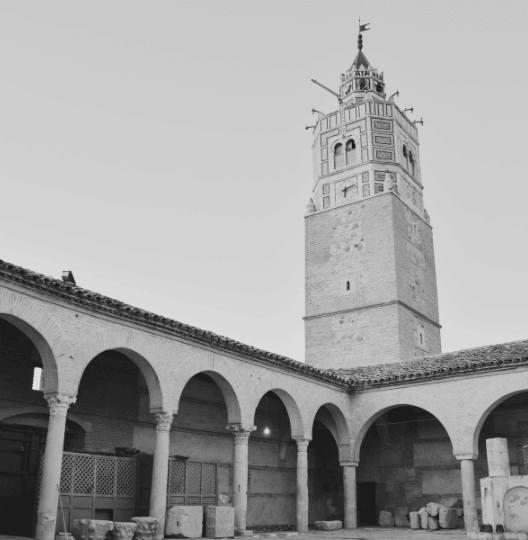
Public Holidays in Tunisia (2026)

Tunisia has approximately 15 public holiday days per year, combining secular national days with Islamic holidays whose dates shift annually based on the lunar calendar.

Date Holiday
January 1 New Year’s Day
March 20 Independence Day
March 20-22 Eid al-Fitr (approximate, 3 days, overlaps with Independence Day)
April 9 Martyrs’ Day
May 1 Labour Day
May 27-28 Eid al-Adha (approximate, 2 days)
June 16 Islamic New Year (1 Muharram, approximate)
July 25 Republic Day
August 13 Women’s Day
August 25 Mawlid (Prophet’s Birthday, approximate)
October 15 Evacuation Day
December 17 Revolution and Youth Day


Good to Know: In 2026, Eid al-Fitr falls on March 20, the same date as Independence Day, creating a rare overlap. Employers should confirm whether the government grants substitute days. All Islamic holiday dates depend on moon sighting and may shift by 1-2 days. August 13 (Women’s Day) is unique to Tunisia and celebrates the 1956 Code of Personal Status, which gave Tunisian women among the most extensive rights in the Arab world. Employees who work on public holidays are entitled to double pay.

Review the best providers in Tunisia

Multiplier
Multiplier

4.5 / 5.0

Deel
Deel

4.5 / 5.0

G-P
G-P

3.8 / 5.0

BIPO
BIPO

3.8 / 5.0

IntelliPro
IntelliPro

3.9 / 5.0