Morocco Hiring Guide

Hire compliantly in Morocco. Navigate CNSS contributions, the Moudawana labor code and a francophone talent market that bridges Europe and Africa.

Compare Providers Now

Capital

Rabat

Language

Arabic, French

Average Salary

MAD 6,000

Payroll Cycle

Monthly

Employer Cost

21%

Paid Leave

18 days

Public Holidays

13 days

Tax Rates

0-37%
Morocco

Morocco Guides

Detailed guides on the employment topics that matter most when hiring in Morocco. Independently researched, updated for 2026.

Minimum Wage Morocco Guide: 3,400 MAD/Month in 2026

Morocco's minimum wage (SMIG) rose 5% to 17.92 MAD per hour in January 2026, or roughly 3,400 MAD per month ($372 USD). The agricultural minimum (SMAG) rises to 97.44 MAD per day from April 2026. This is the final phase of a 20% cumulative increase since 2021, negotiated through tripartite social pacts. This guide covers the SMIG and SMAG rates, who they apply to, employer CNSS costs (~21% on top of salary), the 2025 income tax reform, how overtime and severance are calculated from the minimum wage, the historical increase pattern, how Morocco compares to Tunisia and Egypt for francophone nearshoring, and what EOR clients need to know about Damacom filings and collective agreement compliance.

Read Article

Best Employer of Record in Morocco

We independently review and rank providers based on their actual performance in Morocco, covering pricing transparency, onboarding speed, in-country support and hiring compliance.

Morocco’s CNSS contribution system applies different ceilings to different components. A provider that caps all contributions at MAD 6,000/month is underpaying AMO, family allocations and training tax, all of which have no ceiling.

Best EORs in Morocco
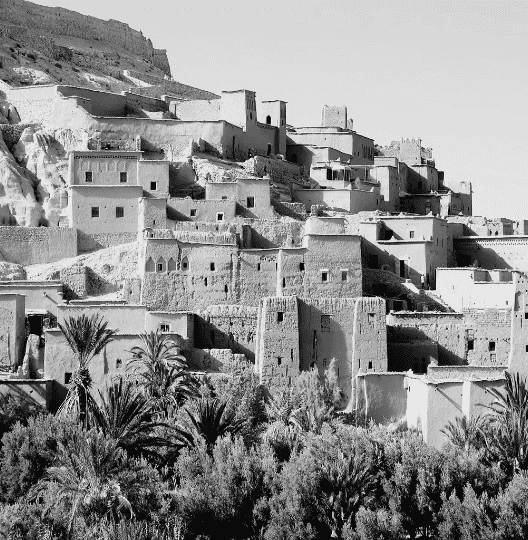
morocco dessert picture landscape

Before You Hire in Morocco

  • Employer CNSS contributions total 21.09% of gross salary. Split across family allowances (6.40%), social benefits (8.60%), AMO health insurance (4.11%), and vocational training tax (1.60%). Some components are capped at MAD 6,000/month, others apply to full gross.
  • New hires get a 36-month income tax exemption. Employees hired between January 2021 and December 2026 are exempt from income tax for their first 36 months. This is a genuine cost advantage that reduces net-to-gross gaps significantly for new positions.
  • Annual leave accrues at 1.5 working days per month. That’s 18 days per year, increasing by 1.5 days for every 5 years of seniority. Leave cannot be taken during the first 6 months of employment.
  • Termination requires valid cause and formal procedure. Dismissal without serious misconduct triggers severance based on years of service: 96 hours’ wages for the first 5 years, increasing to 240 hours for 15+ years. Plus notice period pay and any accrued leave.
  • The workweek is 44 hours, not 40. Morocco’s legal maximum is 44 hours per week (or 2,288 hours per year), which can be distributed unevenly across the week. This is longer than most European markets and catches employers off guard.

Why hire in Morocco

Francophone Africa's most developed nearshore hub

Morocco is the default destination for French companies offshoring operations. Casablanca's nearshore ecosystem serves hundreds of European companies in IT, finance, customer support and BPO. The talent pool speaks French natively and English increasingly well.

2-hour flight and 0-1 hour time difference from Western Europe

CET/CET+1 alignment with Paris, Madrid and London. No overnight handoffs, no async delays. For European companies that need teams in the same working hours at African cost levels, no other market is this convenient.

36-month income tax exemption for new hires

The government exempts newly hired employees from income tax for their first 3 years. On a MAD 10,000/month salary, this saves the employee roughly MAD 800-1,200/month in tax, making your gross offer worth more in take-home terms without costing you anything extra.

Casablanca Finance City as a regulated hub

CFC status offers companies reduced corporate tax rates and simplified regulatory access for financial services, consulting and regional headquarters operations. For companies using Morocco as a base for West and North Africa, CFC provides a credible legal and tax framework.

Key Employment Facts

Morocco's labor code allows a 44-hour workweek and accrues leave at 1.5 days per month, both of which differ from European norms most employers assume.

Key Employment Facts
Minimum Wage (SMIG) MAD 17.92/hour (private sector, from January 2026)
Probation Period 1.5 months (workers), 3 months (employees), 6 months (managers)
Standard Working Hours 44 hours/week (2,288 hours/year)
Paid Annual Leave 18 days (1.5 days/month of service)
Notice Period 8 days to 2 months (by role and tenure)
13th Salary Not statutory (common practice)
Sick Leave 6 months at 2/3 pay via CNSS (from day 4)
Maternity Leave 14 weeks at full pay via CNSS

Morocco uses three different probation lengths depending on the employee’s classification: 1.5 months for manual workers, 3 months for salaried employees, and 6 months for managers. Each can be renewed once. Misclassifying the role means applying the wrong probation period, which can invalidate a termination during probation.

What to Watch When Hiring in Morocco

The MAD 6,000 ceiling only applies to some CNSS components

Social allocations (employer 8.60%, employee 4.48%) are capped at MAD 6,000/month. But family allowances (6.40%), AMO health insurance (4.11%) and vocational training tax (1.60%) apply to total gross salary with no ceiling. Misapplying the cap across all components creates underpayment.

Seniority bonus is mandatory after 2 years

Moroccan labor law requires employers to pay a seniority premium: 5% of base salary after 2 years, 10% after 5 years, 15% after 12 years, 20% after 20 years, 25% after 25 years. This is not discretionary. It's a legal entitlement that compounds your payroll cost over time.

Employment contracts must be in Arabic or French

Contracts in English are not legally enforceable in Morocco. All employment documentation must be in Arabic or French to be valid before Moroccan labor courts. If your provider issues English-only contracts, they offer no legal protection.

CNSS declarations are filed via damancom.ma

All employer declarations and contribution payments go through CNSS's online platform. Declarations are due by the last day of the month following payroll. Late filings trigger automatic penalties. Your provider must have active CNSS registration and damancom access.

Employer Costs and Employee Taxes in Morocco

Morocco's employer contributions total 21.09% of gross salary. The system splits across five separate CNSS branches, each with different rules on ceilings and calculation bases.

Employer Contributions
Contribution Employer Rate
Family Allowances 6.40% (no ceiling)
Short-term Social Benefits 1.05% (capped at MAD 6,000/month)
Long-term Social Benefits 7.93% (capped at MAD 6,000/month)
AMO (Mandatory Health Insurance) 4.11% (no ceiling)
Vocational Training Tax 1.60% (no ceiling)
Total Employer Cost 21.09% of gross salary
Employee Taxes
Tax / Contribution Employee Rate
Income Tax (IR, progressive) 0-37%
CNSS Social Allocations 4.48% (capped at MAD 6,000/month)
AMO (employee share) 2.26% (no ceiling)
Professional Expenses Deduction 20% of gross (capped at MAD 30,000/year)

Total employer cost in Morocco runs at approximately 1.21x of gross salary. For an employee earning MAD 10,000/month in Casablanca, the employer pays roughly MAD 12,100 in total monthly cost. The split ceiling structure matters: employees earning above MAD 6,000/month see their social allocation contributions flatten, but AMO, family allocations and training tax keep scaling. Factor in the mandatory seniority premium (5-25% of base) for longer-tenured employees.

Public Holidays in Morocco (2026)

Morocco observes approximately 13 public holidays per year, a mix of national and Islamic holidays. Islamic dates are approximate and shift annually based on the lunar calendar.

Date Holiday
January 1 New Year’s Day
January 11 Independence Manifesto Day
March 20-21 Eid al-Fitr (approximate, 2 days)
May 1 Labour Day
May 27-28 Eid al-Adha (approximate, 2 days)
June 17 Islamic New Year (approximate)
July 30 Throne Day
August 14 Oued Ed-Dahab Day
August 20 Revolution of the King and the People
August 21 Youth Day
August 25-26 Prophet’s Birthday (approximate, 2 days)
November 6 Green March Day
November 18 Independence Day

Islamic holidays follow the Hijri calendar and shift by approximately 10-11 days each year. The government announces exact dates based on moon sighting. Eid al-Fitr and Eid al-Adha are typically 2 days each, and the Prophet’s Birthday is observed for 2 days. Employees who work on public holidays are entitled to overtime at 50% premium (daytime) or 100% premium (nighttime).

Review the best providers in Morocco

Africa Deployments Solutions (ADS)

3.3 / 5.0

Multiplier
Multiplier

4.5 / 5.0

Africa HR Solutions
Africa HR Solutions

3.6 / 5.0

Employ Africa
Employ Africa

3.3 / 5.0

Aamalcom
Aamalcom

3.1 / 5.0