Hire compliantly in the Philippines. Navigate SSS, PhilHealth, Pag-IBIG and a labor code that mandates 13th month pay, service incentive leave and some of the strongest employee protections in Southeast Asia.
Detailed guides on the employment topics that matter most when hiring in the Philippines. Independently researched, updated for 2026.
Insiders #3 with SOS: Why the Philippines Wins in Global Hiring
Martin English of Smart Outsourcing Solution breaks down the Philippines EOR market, pricing transparency, AI offshore staffing, and why specialist providers keep winning against global platforms.
Minimum Wage in the Philippines: The Complete 2026 Guide
This guide breaks down the Philippines’ minimum wage system for 2026, covering the regionalized daily wage structure across all 17 regions, the current rates in Metro Manila (NCR) and key provinces, mandatory employer contributions to SSS, PhilHealth, and Pag-IBIG, compliance requirements under Philippine labour law, penalties for underpayment including double indemnity, 13th month pay and other mandatory benefits, and how minimum wage compares to living costs across major Philippine cities.
Work Visa for Philippines 2026: The Complete Employer Guide
Hiring foreign nationals in the Philippines requires a two-step process: an Alien Employment Permit from DOLE and a 9(g) Pre-Arranged Employment Visa from the Bureau of Immigration. New 2026 rules under DOLE Department Order 248 introduce mandatory Economic Needs Tests, strengthened Understudy Training Programs, and pre-arrival AEP processing. This guide covers the full process, visa types, costs, timelines, exemptions, and what it means for EOR arrangements.
SSS contributions are bracket-based, not flat percentages. A provider applying a simple 15% to gross salary instead of using the Monthly Salary Credit table will remit incorrect amounts and fail SSS reconciliation.
Our assessment of providers in the Philippines covers entity structure, payroll accuracy, benefits administration and compliance with DOLE regulations.
13th month pay is mandatory and due before December 24. Every rank-and-file employee is entitled to one-twelfth of their total basic salary earned during the year. This is not a bonus. It’s a legal entitlement under Presidential Decree 851 and cannot be waived.
SSS contributions increased to 15% in 2025-2026. The employer shoulders approximately 10% and the employee 5%, calculated on the Monthly Salary Credit bracket. The maximum MSC is PHP 30,000, capping employer SSS cost at roughly PHP 2,850/month.
Minimum wages vary by region and are set by Regional Tripartite Boards. Metro Manila’s minimum is PHP 610-645/day. Other regions range from PHP 341-520/day. There is no single national minimum wage in the Philippines.
Probation is capped at 6 months with specific rules. Employers must communicate reasonable standards for regularization at the start. Failure to do so means the employee is considered regular from day one.
Termination requires either just or authorized cause. The Labor Code distinguishes between just cause (employee misconduct) and authorized cause (redundancy, retrenchment). Each has different procedural requirements and separation pay formulas. No at-will employment exists.
Why hire in the Philippines
The world's largest English-speaking BPO workforce
The Philippines overtook India as the global BPO capital over a decade ago. 1.4 million Filipinos work in outsourced services, with native-level English fluency, neutral accents and deep cultural familiarity with US and Australian business norms. No other market offers this combination at this price point.
105 days of maternity leave at full pay, funded by the state
The 2019 Expanded Maternity Leave Act provides 105 days of fully paid leave covered by SSS, not the employer. This is one of the most generous maternity provisions in Asia and it costs the employer nothing beyond regular SSS contributions. It's a genuine retention advantage for building diverse teams.
Night differential pay creates a natural fit for US-hours work
Filipino labor law requires a 10% night differential premium for work between 10pm and 6am. For companies operating US-shift BPO or support teams, this is already baked into the cost structure. Workers actively seek night shift roles because the premium increases take-home pay.
Semi-monthly payroll aligns with Filipino financial planning culture
Philippine law requires payment at intervals not exceeding 16 days, making semi-monthly payroll (15th and last day) standard. This isn't just compliance, it matches how Filipino workers budget, take loans and manage household expenses. Switching to monthly pay will create employee dissatisfaction.
Key Employment Facts
The Philippines mandates only 5 days of service incentive leave, but most employers offer 15-20 days to remain competitive in the BPO and tech talent market.
Key Employment Facts
Minimum Wage
PHP 610-645/day (NCR), varies by region
Probation Period
6 months maximum
Standard Working Hours
48 hours/week (8 hours/day, 6 days)
Paid Annual Leave
5 days SIL (Service Incentive Leave)
Notice Period
30 days (employer or employee)
13th Month Pay
Mandatory, 1/12 of annual basic salary
Sick Leave
No statutory paid sick leave (SIL can be used)
Maternity Leave
105 days at full pay (SSS-funded)
Good to Know: The Philippines has no statutory paid sick leave. The 5-day SIL can be used for any purpose including illness. Most competitive employers provide 10-15 days of separate sick leave on top of SIL. If you offer only the statutory minimum, expect high attrition, especially in BPO and tech where 15+ days sick leave is standard.
What to Watch When Hiring in the Philippines
SSS uses a bracket system, not flat percentages
SSS contributions are determined by the employee's Monthly Salary Credit (MSC) bracket, not by applying 15% to actual gross salary. Each bracket maps to a fixed contribution amount. Using flat percentage math will produce incorrect remittances that fail SSS reconciliation.
Holiday premium pay rules are complex and expensive
The Philippines has both regular holidays (100% premium) and special non-working days (30% premium) with different pay rules. An employee who works on a regular holiday earns 200% of daily rate. If that falls on a rest day, it's 260%. These calculations compound and are frequently miscalculated.
Regularization after probation is automatic if standards aren't documented
If the employer fails to communicate clear, reasonable standards for regularization at the start of probation, the employee is deemed regular from day one. Terminating a "probationary" employee without documented standards becomes an illegal dismissal case at DOLE.
De minimis benefits have specific tax-exempt thresholds
Meal allowances (PHP 2,000/month), rice subsidy (PHP 2,000/month or 50kg), clothing allowance (PHP 6,000/year) and others are tax-exempt only within specific limits. Exceed the threshold and the entire amount, not just the excess, becomes taxable. Payroll must track each benefit against its individual cap.
Employer Costs and Employee Taxes in the Philippines
Philippine employer contributions add 10-14% on top of gross salary through SSS, PhilHealth and Pag-IBIG. The 13th month pay adds another 8.33% when amortized across the year.
Employer Contributions
Contribution
Employer Rate
SSS (Social Security System)
~9.5% of MSC (capped at PHP 30,000 MSC)
SSS EC (Employees’ Compensation)
PHP 10-30/month (by MSC bracket)
PhilHealth (Health Insurance)
2.5% of basic salary (capped at PHP 100,000)
Pag-IBIG (Housing Fund)
2% of compensation (capped at PHP 10,000)
13th Month Pay (amortized)
~8.33% of annual basic salary
Total Employer Cost
~10-14% + 13th month
Employee Taxes
Tax / Contribution
Employee Rate
Income Tax (TRAIN Law, progressive)
0-35% (0% on first PHP 250,000/year)
SSS (employee share)
~4.5% of MSC
PhilHealth (employee share)
2.5% of basic salary
Pag-IBIG (employee share)
2% of compensation (capped at PHP 10,000)
Good to Know: Total employer cost in the Philippines runs at approximately 1.18x to 1.22x of gross salary when SSS, PhilHealth, Pag-IBIG and amortized 13th month pay are included. For an employee earning PHP 40,000/month in Manila, budget approximately PHP 47,200 to PHP 48,800 in total monthly cost. The contribution caps keep costs flat for higher earners: an employee on PHP 80,000/month costs only marginally more in contributions than one on PHP 40,000, because SSS, PhilHealth and Pag-IBIG all cap out well below PHP 80,000.
Public Holidays in the Philippines (2026)
The Philippines has 12 regular holidays and 9 special non-working days. Regular holidays carry 200% pay for work performed. Special non-working days carry 130%.
Date
Holiday
Type
January 1
New Year’s Day
Regular
January 29
Chinese New Year
Special
February 25
EDSA Revolution Anniversary
Special
March 20
Eid al-Fitr (approximate)
Regular
April 2
Maundy Thursday
Regular
April 3
Good Friday
Regular
April 5
Black Saturday
Special
April 9
Araw ng Kagitingan (Day of Valor)
Regular
May 1
Labour Day
Regular
May 27
Eid al-Adha (approximate)
Regular
June 12
Independence Day
Regular
August 21
Ninoy Aquino Day
Special
August 25
National Heroes Day
Regular
November 1
All Saints’ Day
Special
November 2
All Souls’ Day
Special
November 30
Bonifacio Day
Regular
December 8
Immaculate Conception
Special
December 24
Christmas Eve
Special
December 25
Christmas Day
Regular
December 30
Rizal Day
Regular
December 31
New Year’s Eve
Special
Good to Know: The Philippines has one of the highest numbers of public holidays globally. The distinction between regular and special non-working days matters for payroll: regular holidays require 200% pay if worked (260% if also a rest day), while special days require 130% (150% if also a rest day). The president may declare additional special holidays throughout the year, sometimes with short notice.
Compare All EOR Providers for the Philippines
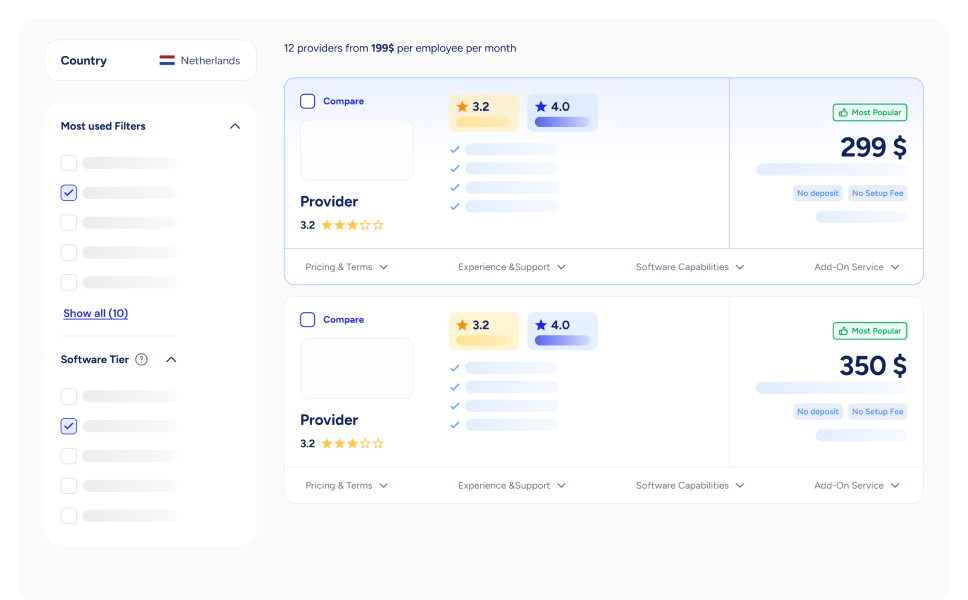
Use the Employsome EOR Comparison Tool to filter providers by Philippines coverage, pricing, entity type and supported services. Over 130 EOR providers compared side by side.