
Table of Contents
- Who's Behind Agility EOR?
- Why Launch an EOR in 2023 Into a Crowded Market?
- What "Service-First" Actually Looks Like
- The Scalability vs. Personalisation Trade-Off
- Agility's Ideal Customer Profile
- Own Entity vs. Local Partners: How Agility Decides
- Which Countries Are Easy, and Which Are Painful?
- Common Mistakes When Hiring Internationally
- What It Means to Be Bootstrapped in EOR
- How AI Changes the EOR Game
- Where the Industry Is Heading
- Why EOR Keeps Attracting Founders
- One Piece of Advice
Welcome to Employsome Insiders, a series where we sit down with Employer of Record (EOR) founders and operators to dig into the markets, models, and decisions behind the companies shaping global employment. Honest conversations with the people building this industry from the ground up.
For this edition, we spoke with Scott Winter, Co-Founder and CHRO of Agility EOR, a bootstrapped, service-first EOR provider launched in 2023 by three operators who previously helped build one of the first successful global EOR businesses. In a market where competitors have collectively raised billions, Agility made a deliberate bet in the opposite direction: no venture capital, no private equity, and no (immediate) plans to sell.
It’s a provocative position in an industry that’s been defined by fundraising rounds and growth-at-all-costs. We wanted to understand whether it actually works and what it looks like from the inside.

Who’s Behind Agility EOR?
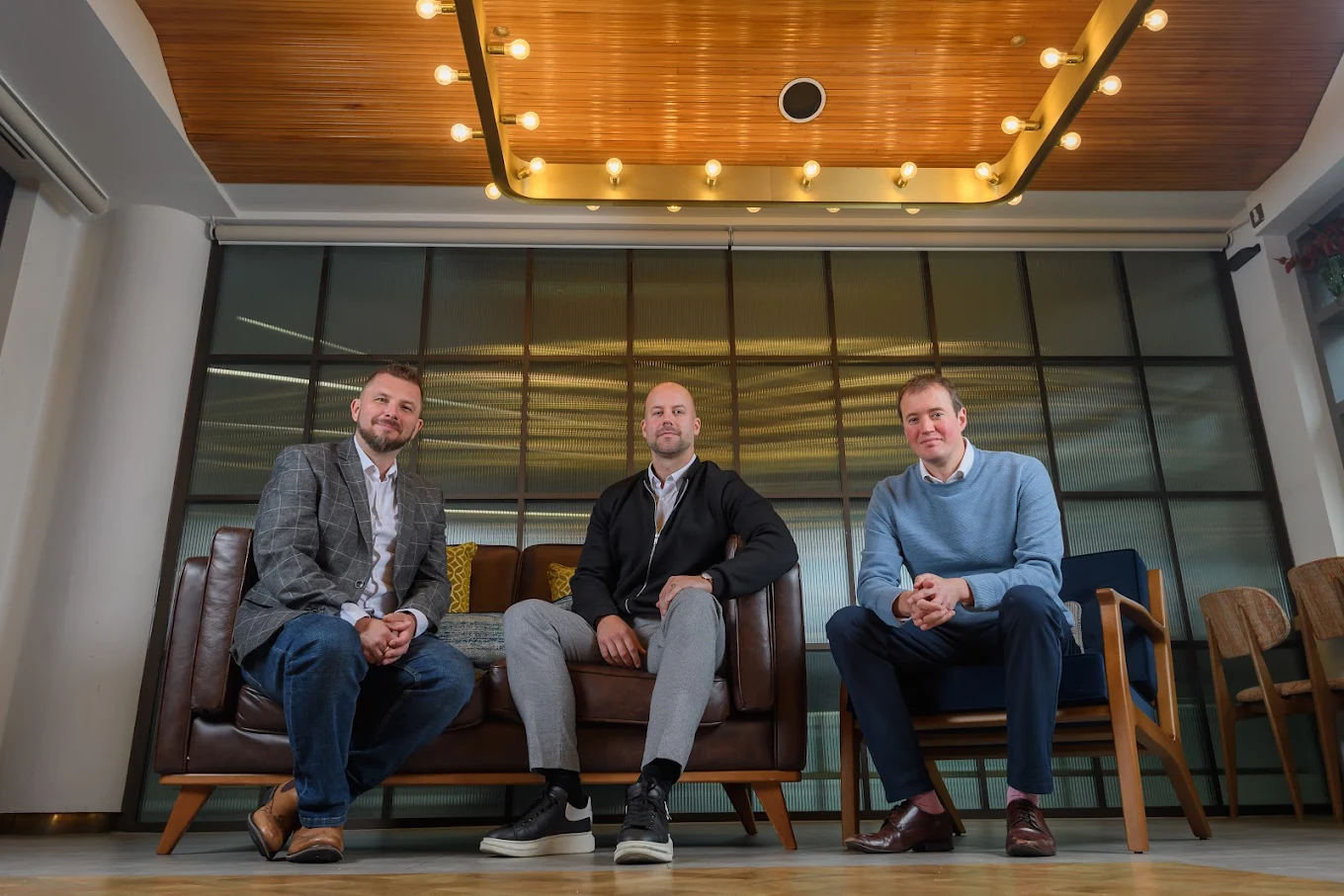
Most EOR companies are founded by people who saw the industry from the outside and spotted a market opportunity. Agility is different its three founders spent years operating inside the EOR machine before deciding to build their own. Scott Winter brings 20 years in HR, including firsthand experience as the person inside an HR department trying to employ someone in a country without a legal entity. Daniel Masters has over a decade in international payroll. Sam Barnes has spent the same amount of time on the commercial side of EOR. All three worked together at a previous EOR provider before launching Agility.
“My background is HR. I’ve spent 20 years in it. I’ve been the person sitting in an HR department trying to find a way to employ someone in a country where we don’t have a legal entity. I know what that feels like, and I know what HR teams actually need from a provider.
Dan’s background is international payroll. He’s been doing it for over ten years and knows the country-level detail that most providers get wrong. He’s obsessive about getting things right for the client, and that comes through in everything he does.
Sam has spent the same amount of time on the EOR side. He’s the one who will tell a potential client that EOR isn’t the right solution for them if it genuinely isn’t. We’d rather lose a deal than put a client into an arrangement that doesn’t work for them.”
That last point turning away business when EOR isn’t the right fit came up repeatedly throughout our conversation. It’s either a genuine operating principle or very good messaging. Given that they’re bootstrapped and don’t have investor pressure to inflate revenue numbers, we’re inclined to take it at face value.
Why Launch an EOR in 2023 Into a Crowded Market?
By 2023, the ever-growing EOR market was already saturated at the top. Deel had raised over $600 million. Remote, Oyster HR, and Papaya Global had each secured nine-figure rounds. Launching another EOR at that point looks, on paper, like arriving late to a party that’s already winding down. We asked Scott why he saw it differently.
“Because the money is the problem, not the solution. When you raise hundreds of millions, you are answerable to investors. Their priority is growth and returns, not whether an employee in Germany got paid correctly this month. That pressure changes everything about how a business operates.
All that investment has created a lot of providers who are strong on marketing and weak on delivery. We saw that first-hand. Clients were coming to us because they’d already tried the big names and been let down. Their approach has created a gap in the market for a provider that actually does what it says it will do.”
It’s a sharp take and one that will resonate with anyone who’s experienced the gap between an EOR provider’s sales pitch and their actual delivery. The underlying thesis is that the VC-funded growth model and the service quality model are structurally in tension, and that tension creates a permanent opening for operators who prioritise the latter. Whether that’s a sustainable long-term position or just a phase before the market commoditises entirely is the real question.

What “Service-First” Actually Looks Like
“Service-first” is easy to claim and hard to verify. Every EOR provider says they offer great service. We pushed Scott for specifics, what does it actually look like when a client has an urgent issue?
“They pick up the phone or send us a message, and they get a person who knows all about them. That person either has the answer or knows exactly who to go to for it.
Take a real example. A client wants to include specific restrictive covenants in an employment contract for a new hire in the UK. A platform will give them a template. We’ll get on a call, understand what they’re trying to protect, talk through how those clauses interact with local employment law, and advise them on the best way to achieve what they want while staying compliant. That might involve separating certain clauses into a standalone agreement between the client and the employee, or adjusting the wording to avoid the employment being reclassified. That level of detail doesn’t come from a chatbot, or a generic Account Manager without direct experience and expertise in HR and Payroll.
Whether it’s 4pm on a Friday or 9am on a Monday, it’s the same service.”
This is the kind of concrete example that’s worth paying attention to. The difference between “here’s a template” and “let’s talk through what you’re actually trying to achieve” is significant, especially in jurisdictions where getting employment contracts wrong has real legal consequences. If you’re evaluating EOR providers and trying to assess service quality, the restrictive covenant scenario is actually a good litmus test to use in your due diligence calls.
The Scalability vs. Personalisation Trade-Off
There’s a structural tension at the heart of the EOR industry: the more you automate, the harder it is to handle exceptions. And in international employment, exceptions are the rule. We asked Scott how Agility navigates this.
“Our product is people. We employ people on behalf of our clients, and we look after those people. You can’t automate looking after the complexities of people and their unique situations.
A platform can process a payroll run, but it only works if everything lands exactly on time. Miss a deadline by a day because you were dealing with something unexpected whether a late starter, a contract change, a client who needed more time to confirm a bonus you’re looking at a penalty charge or your employee doesn’t get paid on time. The system doesn’t care why, it just cuts off.
We don’t work that way. We have people, and people can adapt. If a client calls us two days before payroll with a change, we deal with it. We’re not going to charge them for the privilege of being flexible. That’s just how you should look after someone’s employees.”
He also made a broader point about market dynamics that’s worth noting:
“What we’re seeing is that companies who went with a tech-first provider are now coming back to the market looking for something different. They tried the platform approach, and it didn’t give them what they needed. That is where we come in.
We don’t need to compete on their terms. We haven’t raised any money. We have no investors to satisfy. We can stay the size that allows us to deliver properly and remain profitable doing it. If we grow to a point where the service suffered, we’d have defeated the purpose of starting the business in the first place.”
That’s a deliberately constrained growth strategy and in an industry obsessed with scale, it’s a contrarian bet. Whether it leads to a durable niche or an eventual ceiling is something only time will answer. But for mid-market companies who’ve been burned by the platform-first experience, the pitch clearly lands.
Agility’s Ideal Customer Profile
We asked Scott who gets the most value from working with Agility. His answer was more nuanced than the typical “we serve everyone” positioning.
“Where we tend to add the most value is with companies up to around a thousand employees. At that size, the people making HR decisions still care about the individual employee experience. They want to know that their person in Spain or the Czech Republic is being properly looked after, not just processed. The very large corporates tend to want automation and scale, which is fair enough, but it’s not what we do.”
This is useful transparency. If you’re a 5,000-person enterprise that needs a fully automated global platform, Agility EOR is explicitly not positioning itself for you and that honesty is more helpful than a provider that claims to serve everyone equally. If you’re a company with 50 to 1,000 employees that values the employee experience in your international hires, this is clearly the sweet spot they’re optimising for.
Own Entity vs. Local Partners: How Agility Decides
One of the most important and least discussed questions when choosing an EOR is whether the provider operates through their own legal entity in a given country or through a local partner. The difference matters for response time, compliance control, and cost. Agility EOR runs a hybrid model, and Scott was straightforward about how they make the call.
“It comes down to two things: volume and expertise. If we have enough clients in a country and we have the in-house knowledge to deliver properly, we’ll run our own entity. We operate entities across Europe, the United Kingdom and the Channel Islands, and that’s where our deepest experience sits.
In regions where we don’t have that depth of knowledge, like South East Asia for example, we use local partners. We’d rather work with someone who genuinely knows the local employment law inside out than try to do it ourselves and get it wrong.
We vet our partners very carefully. If they can’t meet our expectations on response time, accuracy, and flexibility, they don’t work with us. Our name is on the service, so anyone acting on our behalf has to deliver to the same standard.”
If you’re comparing EOR providers on Employsome, this is exactly the kind of detail that matters. A provider with their own entity in a country can typically move faster, control compliance more tightly, and avoid the margin stacking that comes with intermediaries. Agility EOR’s strength is clearly Europe and the UK. Outside that zone, they’re operating through the same partner model as many other providers.
Which Countries Are Easy, and Which Are Painful?
We asked Scott to get specific about which countries have been straightforward and which have been genuinely difficult from an operator perspective. This is the kind of insight you rarely get from EOR marketing pages.
“The UK is straightforward to operate in. The employment law is well-established, HMRC processes are clear, and there are very few surprises. Ireland and the Channel Islands are similar, as is Luxembourg and the Czech Republic.
Portugal has been good to work with. The labour code is protective of employees, but the rules are clear and the authorities are generally easy to deal with.
France is probably the most difficult country we work with. The labour code is extremely detailed, the social security system is complex, and the collective bargaining agreements add another layer on top. If you’re not set up to handle that level of detail, things go wrong quickly.
Germany sits somewhere in the middle. The rules are strict but predictable. The challenge there is more around getting the detail right on things like VWL contributions, bAV pension schemes. It’s not painful, but it requires real attention.”
If you’re hiring in France and your EOR provider doesn’t proactively mention collective bargaining agreements and the social security complexity, that’s a red flag. This is the kind of country-level granularity that separates providers who genuinely operate in a market from those who simply list it on their website.
Common Mistakes When Hiring Internationally
Every EOR founder we talk to has a list of mistakes they see foreign companies make repeatedly. Scott’s examples were among the most specific we’ve heard.
“The most common one is assuming that what works in their home country works everywhere else. A US company will draft a contract with at-will termination language and expect it to apply in Germany. It doesn’t. In most of Europe, you can’t terminate an employee without a valid reason and a proper process, and getting that wrong is expensive.
Another common one is underestimating the cost of employment. Companies look at the gross salary and forget about employer social security contributions, mandatory insurance, holiday allowances, and in some countries things like a thirteenth-month payment. In Belgium, for example, the employer costs on top of salary can add 30% or more. If you haven’t budgeted for that, you’re in trouble from day one.
We also see companies trying to use contractor arrangements when they should be employing someone properly. They do it to avoid the cost and complexity, but if the local authorities decide the relationship is actually employment, the company is liable for back-taxes, social contributions, and penalties. It’s a false economy.”
That Belgium detail 30%+ employer costs on top of gross salary is exactly the kind of concrete data point that helps companies plan properly. If you’re budgeting for your first European hire, our country comparison guides break down these cost structures by market.
What It Means to Be Bootstrapped in EOR
Agility is one of the few EOR providers operating without external funding. In an industry where competitors have collectively raised billions, that’s a deliberate choice with real trade-offs. Scott was candid about both sides.
“It makes the important things easier and the visible things harder.
On the easy side: we run the business on our terms. We price fairly. We hire the right people, not the cheapest people. We don’t offshore our support teams to cut costs. If a decision is going to affect service quality, we don’t make it. Nobody is asking us to grow 300% year-on-year or hit targets that force us to compromise on what we deliver.
On the hard side: marketing. When your competitors are spending millions on brand awareness, SEO, sponsorships, and paid advertising, it is very difficult to get in front of the same audience. A couple of years ago, there was also a race to the bottom on pricing, which made it hard for us to compete because we weren’t willing to drop our prices to unsustainable levels. That’s corrected itself now. Prices across the market are coming back up to something more realistic, which has been better for us.
On balance, we’d take our position every time. We sleep well knowing the service is right.”
The pricing observation is worth flagging. Several providers aggressively undercut the market in 2023–2024, some offering EOR services at $199–299/month per employee numbers that many industry observers considered unsustainable. The fact that prices are now normalising suggests those early pricing strategies were indeed loss leaders designed to capture market share, not reflections of actual cost structures.
How AI Changes the EOR Game
AI is reshaping nearly every B2B services category. We asked Scott whether it reinforces or threatens the service-first model.
“AI is useful for us. We already use it internally to handle repetitive tasks more efficiently. That frees up our team to spend more time on the things that actually matter to our clients.
Where I think it goes wrong is when providers use AI as the client-facing layer. If your client has a question about a redundancy process in France, they don’t want to talk to a chatbot. They want someone who understands their situation, knows the employee, and can advise them properly.
For providers who view EOR as a commodity and compete on price, AI probably makes sense as a way to cut costs further. For clients who care about their employees and want proper advice, it doesn’t replace the need for a real person. We think AI will widen the gap between the two types of provider, and that works in our favour.”
Where the Industry Is Heading
We closed with the big picture consolidation, specialisation, and where Scott sees the market moving over the next three to five years.
“Both. The big players are already acquiring smaller providers [Ed. note: such as Payoneer’s acquisition of Boundless or Hightekers acquisition of Serviap], and there’s money set aside for more acquisitions. That will continue.
At the same time, we’re seeing more single-country or regional EOR providers appearing who know their local market inside out. I think there will be a shift back towards those specialists. Companies that have tried the big global platforms and been burned will look for someone who genuinely knows the country they’re operating in, rather than a provider that claims to cover 150 countries but doesn’t have real expertise in any of them.
It goes in cycles. Right now the trend is towards consolidation at the top and specialisation at the bottom. Eventually some of those specialists will get acquired, the consolidated players will struggle with service again, and the cycle will start over.”
Why EOR Keeps Attracting Founders
Every Insiders interview touches on this question and Scott’s answer was the most grounded we’ve heard so far.
“The barriers to entry are low. You can set up an EOR business without a huge amount of capital, and once you have a client on your books, the retention is high. Moving an employee from one EOR to another is disruptive and complicated, so clients tend to stay put regardless of service. On paper, that looks very attractive.
The reality is harder. Running an EOR properly requires deep knowledge of employment law, payroll, tax, and compliance across multiple jurisdictions. Getting payroll wrong has real consequences for real people. I think a lot of new entrants underestimate how to effectively manage all of these requirements, and we’re starting to see some of them struggle.”
That retention dynamic where switching costs are so high that clients stay even when service is poor is one of the structural features of EOR that makes the market look better on paper than it sometimes is in practice. It’s also one of the reasons why comparing providers before you commit matters so much. Once you’re in, moving is painful.
One Piece of Advice
“Know what you’re good at and stick to it. Don’t try to be everything to everyone. If your strength is service, commit to that and don’t apologise for it.
Be honest with your clients, even when the honest answer isn’t what they want to hear. If EOR isn’t the right solution for them, say so. That builds trust, and trust is what keeps clients with you long-term.
And don’t let anyone else’s growth story make you feel like you’re behind. We’ve never chased growth for the sake of it, and that’s been one of the best decisions we’ve made.”
—
This is the second edition of Employsome Insiders. If you’re building in the EOR space and want to be featured, get in touch.
Want to compare EOR providers including Agility EOR side by side? Start comparing on Employsome, it’s free.

Written by
Christa is a Copywriter at Employsome with 17 years of professional writing experience across global brands, startups, and online publications. A native English-Finnish writer, she brings strong editorial skills and a versatile background in business, SaaS, and finance. At Employsome, Christa focuses on clear, practical content about HR, payroll, and Employer of Record topics.
Our content is created for informational purposes only and is not intended to provide any legal, tax, accounting, or financial advice. Please obtain separate advice from industry-specific professionals who may better understand your business’s needs. Read our Editorial Guidelines for further information on how our content is created.